
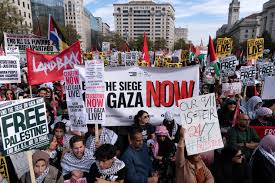
The Hamas attack against Israel on October 7 2023, Israel’s retaliation against Hamas-controlled Palestine, and the wave of demonstrations expressing opposition to or support for one or other side in the ongoing conflict, have made the subject of anti-Semitism newly relevant. A form of bigotry dating from the rise of Christianity and scarring the histories of the Middle Ages and the Renaissance, anti-Semitism descended to its lowest depths in the mass societies of the Nineteenth and Twentieth Centuries, and reached its nadir with the industrialized murder of the Nazi Holocaust – at least it appeared so until now.
Outbursts of anti-Jewish invective and violence originating with today’s alt-right, the worst example of which was the 2018 shooting spree at the Tree of Life synagogue in Pittsburgh, Pennsylvania, that left eleven dead, have been matched by the open denunciations of Israel and harassment of Jewish students and instructors marking the campus protests by self-described “progressives” since last year. In January 2024, Jonathan Greenblatt of the Anti-Defamation League (ADL) stated that “The American Jewish community is facing a threat level that’s now unprecedented in modern history…In this difficult moment, antisemitism is spreading and mutating in alarming ways.”
Do all these mutations represent modernized expressions of what’s been called the world’s oldest hatred, an archaic prejudice hitherto mostly dormant but somehow revived in contemporary culture? Or is the hatred itself too old to be viable, and is it only being misperceived, as though from habit, where it’s in fact evolved into something very different? Should we be skeptical, and why? Even starting to answer these questions, by weighing contrary takes on Israel, Zionism, and Jewishness, is fraught with hazard. Clarifying the terms of the debate may lower it.
Though practically anyone called an anti-Semite today will deny the allegation, in the decades before the First World War “Anti-Semitism” was in fact a point of pride among some Germans, who rejected what they saw as Jews’ negative effects on “true” German culture. In other countries, anti-Semitism was an attitude hard to delineate but plain enough in action: mean-spirited jokes, exclusionary housing or admissions conventions, broad portrayals of secret Jewish cabals controlling world finance or world media, and sometimes – even apart from the horrors perpetrated by the Nazis – physical attacks on individual Jews. In his 1945 essay “Antisemitism in Britain,” George Orwell observed, “The Jew who grew up in Whitechapel took it for granted that he would be assaulted, or at least hooted at, if he ventured into one of the Christian slums nearby, and the ‘Jew joke’ of the music halls and the comic papers was almost consistently ill-natured.” The American anti-Semitism depicted in the groundbreaking 1947 film Gentleman’s Agreement was only a little more polite.

In more recent times, the meaning of anti-Semitism has been formally codified by numerous institutions including the Simon Weisenthal Center (SWC) and the International Holocaust Remembrance Alliance (IHRA). The American Jewish Committee (AJC) in 2004 drafted a characterization which specified, “antisemitism has been manifested in the demonization of the state of Israel.” The IHRA’s working definition of the term was adopted in 2015 and is now used by other groups and national governments. Its core sentences explain that Antisemitism is a certain perception of Jews, which may be expressed as hatred toward Jews. Rhetorical and physical manifestations of antisemitism are directed toward Jewish or non-Jewish individuals and/or their property, toward Jewish community institutions and religious facilities. The statement also acknowledges that “criticism of Israel similar to that leveled against any other country cannot be regarded as antisemitic,” although it gives illustrative examples that include “Denying the Jewish people their right to self-determination, e.g. by claiming that the existence of the state of Israel is a racist endeavor” and “Applying double standards by requiring of [Israel] a behavior not expected or demanded of any other democratic nation.”
This language, linking Israel as a political entity with Jews as people, is at the heart of today’s disputes. “Since antisemitism has never been stable, we should not be surprised to see its definition shift yet again in the twenty-first century,” wrote Rebecca Ruth Gould in her 2023 study Erasing Palestine: Free Speech and Palestinian Freedom. “What is more surprising is how uncritically and rapidly twenty-first century definitions that focus predominantly on Israel and anti-Zionism as manifestations of antisemitism have been accepted and internalized within liberal Euro-American consciousness.” The upshot is that since October 2023, anti-Semitism is almost solely apprehended in words or actions related to fighting in the Middle East. But it’s these apprehensions that most warrant analysis, and doubt.
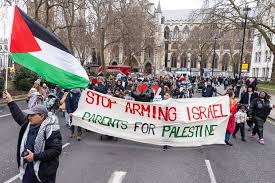
It is not anti-Semitism to narrow the definition of anti-Semitism. An unexpected byproduct of the civil rights advances made over several decades has been the convenient invocation of racism, sexism, or other biases as a political tool. Something that originally arose from valid grievance against obvious injustice can eventually turn into a racket, or a handy argument winner. Thus it’s become easy to write off parental objections to minors’ gender-affirming medical treatment as transphobia, say, or to blame a lack of female CEOs on systemic misogyny. In 2024, likewise, condemnation of Israeli actions in its war against Hamas is glibly described as anti-Semitism. The implication here, however, is not moral outrage – “That’s hurtful” – but sophistry – “Objection overruled.” As Rebecca Ruth Gould asserts, “Under the IHRA definition, fighting antisemitism has become an empty performance, undertaken for political gain.”
“I don’t want to dismiss the anger that the left feels about the terrible human cost of the Israeli counterinvasion of Gaza, or denounce criticism of Israel as inherently anti-Semitic,” conceded Franklin Foer in an Atlantic essay of April 2024. “Nor do I believe that anti-Zionist is a term that should be axiomatically interchangeable with anti-Semite…[N]ot everything that is terrible for the Jews is anti-Semitic.” Yet others make no such distinctions. In his 2021 essay collection, The Cruelty Is the Point: The Past, Present, and Future of Trump’s America, Adam Serwer observed that “Both criticism of Israel in anti-Semitic terms, and attempts to conflate justifiable criticism of Israel with anti-Semitism are common, and many people on both sides of the argument are uninterested in distinguishing between them unless forced to do so…Defending Israeli and American Jews alike from anti-Semitism is not the same thing as protecting Israel’s territorial ambitions, no matter how much the Israeli and American right wish it to be so.”
Throughout his 2015-2020 term as leader of Britain’s Labor Party, for example, Jeremy Corbyn faced charges of anti-Semitism from British media and rival British politicians. Corbyn was decidedly left-wing and anti-war in his views, and had expressed support for “Palestine solidarity.” This left him open to virtually irrefutable attacks, described by Asa Winstanley in his 2023 book Weaponising Anti-Semitism: “‘Do you agree that’ a certain quote, social media posting, or unfortunate turn of phrase ‘is anti-Semitic?’ became the new ‘Are you now, or have you ever been, a member of the Communist Party,’” Winstanley suggested. “Labor’s crucible – the test of its moral character – was the increasingly frenzied accusations of anti-Semitism, where accusation was so often considered evidence.” For Corbyn and his supporters, any response was an admission of guilt.
Other dilemmas have arisen. The IHRA definition says that “Drawing comparisons of contemporary Israeli policy to that of the Nazis” is anti-Semitic, a heads-I-win, tails-you-lose paradox which enshrines the Holocaust as both an unequaled historic catastrophe and a permanent justification of anything authorized by any present-day government of Israel. The Holocaust is the ultimate rationale for the Israeli national agenda, in other words, and contesting the national agenda is ultimately no different than the Holocaust. But when most people of all backgrounds still associate anti-Semitism with Adolf Hitler, Kristallnacht, and Auschwitz, ascribing the same impulses that spawned the Final Solution to a pro-Palestinian speech in London, or an editorial in a California student newspaper, reduces anti-Semitism into just another entry in the victim Olympics – a way of changing the subject from current upheavals to a settled past.
It should also be said that, like other forms of discrimination, anti-Semitism can arise out of a kind of circular logic, whereby a too-ready willingness to perceive the phenomenon only exacerbates it. Over centuries, common epithets have targeted Jews for being “crafty,” or for being “pushy,” and so jumping to label a movement or policy “anti-Semitic” may reinforce the stereotypes of Jewish identity as uniquely defensive and uniquely self-interested. An old joke shared within the Jewish community, and repeated by Jewish comics like Jackie Mason, told of the aspiring Jewish radio announcer who keeps getting turned down for jobs. “B-b-b-because they’re a-a-a-anti-Semitic!” he stammers when asked why. Comedy aside, if reasoned positions are reflexively denounced as mere hatred, hatred is what they may curdle into. The result, with anti-Semitism, is that the accusation can feel like a vindication for the person being accused of it, whether they’re an elected legislator, a second-year humanities major, or a neo-Nazi. Whatever it is, anti-Semitism is not a charge to throw around lightly.

It is not anti-Semitic to question the prevalence of anti-Semitism. Members of the Jewish Diaspora around the world have conspicuously excelled in business, science, education, and the arts. For a small population, Jewish achievers are overrepresented in prestigious professions like law, medicine, politics, journalism, and entertainment. Ordinary Jewish citizens are neighbors, colleagues, classmates, and spouses, no more connected with sinister conspiracies than ordinary Italians are still connected with the Mafia or ordinary Irish are still connected with drunken brawling. Many North American cities have Holocaust memorials marking an event that took place in another continent; schools in many nations teach mandatory lessons in the history of the Holocaust; international audiences of books, movies, and television are familiar with the iconography of Anne Frank, yellow stars, and gas chambers; laws in some nations criminalize not just Holocaust denial but the vague affront of Holocaust “downplaying.” With major economic and military backing from the US, the state of Israel is virtually a Middle Eastern superpower with the capacity to – as we’ve seen – wreak harsh vengeance on its enemies. It’s difficult to reconcile any of this widely recognized inclusion and influence with the assertion of continued Jewish vulnerability. It’s yet more difficult to accept that highlighting Jewish success, criticizing Holocaust kitsch, or opposing the policies of Benjamin Netanyahu’s government each constitute an anti-Semitic offence.
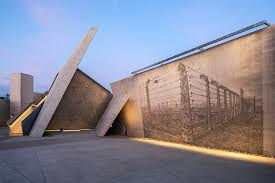
It is not anti-Semitism to be wrong. Anti-Semitism has been called “the socialism of fools” – a blanket explanation for how the world works, reliant on neither reason nor evidence. But is foolishness a form of hate? Compare it with periodic outbursts of anti-Americanism that draw on cliché figures of the loudmouth American tourist, the ranting American TV evangelist, the clueless American politician who can’t locate other countries on a map. Of course they’re cheap caricatures; of course they’re trite. But their inconsistency or illogic don’t by themselves threaten the republic. They’re generalizations made against a whole idea of America, rather than organized hostility aimed against individual Americans. Some of what’s called anti-Semitism, too, may just be a set of tired preconceptions, similar to the ones assumed by a lot of people on a lot of topics they haven’t thought much about, instead of a looming danger to Jewish people themselves. Equating ignorance or trendiness with murderous antipathy gives too much credit to the ignorant and the trendy.
It is not anti-Semitism to be right. A more pointed parallel to anti-Semitism is Islamophobia. While Islam has warred with Christianity since the days of the Crusades, it was only after September 11, 2001 that antagonism toward Muslims was categorized as a special type of prejudice or psychological affliction. Certainly episodes of homicidal anger toward persons seen (or thought to be) Muslim have erupted in numerous places: an armed assault at a New Zealand mosque killed 51 worshippers in 2019; another in Quebec killed six in 2017; and four members of a Muslim family were fatally run down in London Ontario in 2021 – the driver admitted his white nationalist beliefs and he was convicted of terrorism. In North America, women wearing traditional Muslim dress have been publicly insulted or intimidated, and in a few cases, bearded and turbaned Sikhs in the US and Canada have been threatened or killed on the assumption that they were Muslim. Casual bigotry towards religious and secular Arabs is as real as casual bigotry towards religious and secular Jews.
All that said, the definition of Islamophobia has sometimes been stretched to encompass not just ugly slurs and physical harm but reflective considerations of Islam as a faith, and Islamic fundamentalism as a mission. Islamic zealotry, after all, drove al-Qaeda and ISIS; Islamic zealotry was behind the Charlie Hebdo massacre and assorted bombings, shootings, and other rampages; Islamic zealotry promotes a neo-medieval intolerance of nonbelievers and women’s autonomy at odds with hundreds of years of western enlightenment. It isn’t Islamophobic to acknowledge these facts. It isn’t hatred to lament how they hurt the reputation of Islam itself.
Similarly, it isn’t hatred to debate the history of the Middle East, to note bitterly conflicting opinions over territory, religion, and culture, to cite international resolutions and international law, and to grieve the death and suffering visited upon tens of thousands of people. As with any divisive issue – abortion, capital punishment, the rights of the marginalized or the limits of free speech – the occasional point scored by the other side shouldn’t be taken as an attack on everyone holding the opposite view. Indeed, Israelis and Jews in other countries are now questioning the raids on Hamas committed by the Israeli Defence Forces, just as law-abiding Muslims and their friends have had to think about the terrorist outrages committed by Muslim jihadists, and just as patriotic Americans and their allies once had to ponder the invasion of Iraq undertaken by the American military. Self-hatred? Islamophobia? Anti-Americanism? Anti-Semitism? Or just good-faith engagement with complicated problems?

It is not anti-Semitism to acknowledge popular sentiment. As much as anything, the reaction to Israel’s operation in Gaza is indicative of changing demographics in the United States, Canada, and other countries. During the Six-Day War of 1967, the Yom Kippur War of 1973, and the Israeli incursion into Lebanon in 1982, Arab, Middle Eastern, and Asian populations were small minorities within North American and European nations. Relatively recent arrivals with negligible clout as lobbyists or party donors, they seldom comprised enough of a bloc for businesses and politicians to court, or for journalists to acknowledge. But in 2024 there are too many first- and second-generation Americans, Canadians, Australians, and Britons harboring an ancestral sympathy for Palestinians – or with no ancestral stake in any infighting between Abrahamic faiths at all – to be completely ignored in the polls. According to the Arab American Institute, “The number of Americans who claim Arab ancestry has nearly quadrupled since the Census Bureau first measured ethnic origin in 1980,” while Arab Canadians comprised 1.9 percent of the 2021 national census, up from 0.7 percent twenty years before. Tallies of immigration rates from Africa and east Asia have also risen significantly. These newcomers are more likely to advocate for their own collective interests, and less likely to appreciate the old anti-Semitism that preceded their arrival.
On top of this, there are too many Millennials and Gen Zs steeped in lessons of oppression, colonization, and victimhood to be discounted on the university quadrangles, or silenced on social media. “In recent years,” the Anti-Defamation League has stated, “campuses have become a new proving ground for the tactics of all manner of extremists, forcing some colleges and universities onto the frontline in the fight against extremism and anti-Semitism.” But what’s extremism to the ADL may be social justice to a twenty-year-old undergrad. Whatever the validity of the political messages they’ve absorbed, the student cohort is too removed from Hitler, the Holocaust, and Gentleman’s Agreement to consider anti-Semitism particularly relevant to their outlook. In no way do their numbers, or their youth, automatically justify their stances. But they make it hard to reduce them to an inconsequential fringe, or to a Twentieth-Century throwback.
Perhaps this is all progress of a sort, insofar as people perennially treated as outsiders now fall under a general class of the Establishment. Rather than a retreat toward pogroms or death camps, the rallies and occupations observed since October 7 2023 may be no different from earlier rallies and occupations over the Vietnam War, climate change, police brutality, nuclear weapons, Native land claims, sexual harassment, and a hundred other causes that have stirred (or maybe just jaded) average onlookers. Rather than being singled out, pro-Israel groups in North America and Europe are just being lumped in with an assorted roster of abstract bogeys that activists have long conjured: western imperialists, Godless communists, Wall Street bankers, Hollywood elites, greedy capitalists, the deep state, Antifa, and a hundred other faceless villains that have motivated (or maybe just deluded) partisans across a social spectrum.
The protest movement against Israel’s campaign in Gaza isn’t really about who’s Jewish and who isn’t. It isn’t really about any special crimes alleged of Jewish people. It isn’t about some exclusively Jewish quality no other culture has ever had to answer for. Admittedly, a lot of the gestures and language seen and heard in the last months may be simplistic, opportunistic, and naive. A lot of the rhetoric may be upsetting to encounter. But let’s not make it worse by detecting insinuations it doesn’t have. Let’s not make it worse by saying it’s anti-Semitism.
 George Case, Writer