
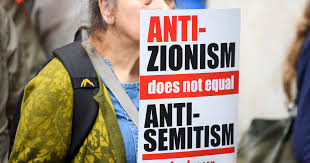
Here are a number of propositions concerning a currently contentious issue in world affairs:
- The nation of Israel is situated on territory previously occupied by another population, who were displaced when Israel’s first citizens, most of them from Europe, arrived to establish their own country on the same land in the late 1940s.
- The terrorist attack of October 7 2023 killed some 1200 Israelis and took about 250 hostages. In retaliation, the Israeli military has since killed an estimated 60 000 people in the Palestinian enclave of Gaza, from where the attacks originated.
- A number of international organizations have condemned Israel’s conduct of its campaign in Gaza, which has also sparked public protests around the world. Some observers say that the Israeli Defence Forces (IDF) have committed war crimes in the region, and others argue that Israeli actions amount to a program of genocide against the Palestinian people.
- Canada, France, and Great Britain have gone against the United States and Israel in announcing plans to recognize an independent Palestinian state.
- Wherever they live, supporters of Israeli policies can expect to encounter vociferous objections. The destruction caused by Israel’s war, the resultant civilian deaths, and the defiant posture of Israeli Prime Minister Benjamin Netanyahu’s government, threaten to make Israel a pariah state.
Each of these statements may be contested; each may contain errors of fact or emphasis. But none of them make reference to Jews, Jewishness, or the faith and culture of Judaism. How is it, then, that so much of the criticism directed against contemporary Israeli tactics and strategies is dismissed as anti-Semitic?
The conflation of Israel (the country) with Jews (the people) has definitely been a device of Israel’s angriest adversaries. Yet Israel’s staunchest champions rely on the same device no less often. “The belief that Jews, alone among the people of the world, do not have a right to self-determination – or that Jewish people’s religious and historical connection to Israel is invalid – is inherently bigoted,” declares the American Jewish Committee website. “Calling for a Palestinian nation-state, while simultaneously advocating for an end to the Jewish nation-state is hypocritical at best, and potentially antisemitic.” At the United Nations in 2024, Benjamin Netanyahu himself stated, “Until Israel, until the Jewish State, is treated like other nations, until this antisemitic swamp is drained, the UN will be viewed by fair-minded people everywhere as nothing more than a contemptuous farce.” Whatever their reasoning, these sorts of charges haven’t succeeded in shaming into silence the mass rallies, campus occupations, and formal censures of Israel which have arisen in the last eighteen months. Either the participants and signatories have suddenly become brazen in their anti-Semitism, or they don’t feel that what they’re doing is anti-Semitic at all. The world’s oldest hatred may be on life support.
Of course, you could say that if any group is entitled to be overly sensitive to the perceived prejudice of others, it’s Jewish people, both in and out of Israel. Jews have been singled out for persecution many times in the past; you can’t blame them for thinking, even wrongly, that they’re being singled out again. The problem is that the accusation of anti-Semitism today doesn’t always feel like an understandable overreaction, but rather a convenient brushoff – not “That hurts me” but “Case dismissed.” Advocates may admit that there can theoretically be fair criticism of Israeli government agendas, yet when faced with a criticism that might actually stick – say, that the mounting death toll in Gaza is depleting Israel’s international credit for arising out of the Nazi Holocaust eighty years ago – they’ll invoke anti-Semitism to change the subject.

This type of evasion happens in other contexts too. People who’ve questioned immigration levels have been written off as xenophobes; people who’ve pondered the obstinate durability of a black American underclass have been written off as racists; people who’ve doubted the benefits of gender-affirming medical treatment for adolescents have been written off as transphobic. Even closer comparisons are found in how people who’ve critically interrogated US foreign and domestic policies have been written off as anti-Americans, and in how people who’ve condemned violent Muslim radicalism are written off as Islamophobes. Elsewhere, “offensive” is used as a synonym for “intolerant,” whereby the offended parties discount as intolerance anything they don’t want to hear. In every case, a good-faith but contrary take on a sensitive topic is parried with a blanket charge of bigotry.
Similarly, the ”double standard” argument – that Israel’s critics ignore comparable or worse deeds conducted by other governments that happen not to be Jewish – has also worn thin. Double standards, in fact, have abounded in geopolitics forever. In World War II, the western allies defeated one totalitarian regime by teaming up with another. During the Cold War, the United States backed brutal anti-communist dictatorships in the name of freedom and democracy. And the War on Terror deployed lies, torture, and mass surveillance to defend American “liberty.” These were all double standards, next to which rebuking Israel ahead of Russia, China, Iran or North Korea doesn’t seem all that egregious.
Indeed, it may be that people protest Israeli actions in 2025 precisely because nominal democracies are expected to be more responsive to popular sentiment. The Hamas organization, like al Qaeda in 2001 or North Vietnam in 1970, may be the real source of the conflict, but the responsibility for making the conflict longer or bloodier is shared among enemies – one of them, at least, is accountable to public opinion. Telling pro-Palestine demonstrators that they should be really be denouncing Iranian theocracy or Islamic fundamentalism instead (or they’re just anti-Semites) denies the Israeli moral agency that Israel’s apologists otherwise celebrate. It’s a contradiction that goes something like, “Israel’s better because it’s a free society,” but also, “Hey, why pick on Israel, when those repressive tyrannies are just as bad?”
As it is, many people outside the area have come to shrug off “the situation in the Middle East” as merely an endless crisis perpetuated by equally backward tribal allegiances. The same exasperation has marked external perspectives on Protestant-Catholic strife in Ireland and Muslim-Hindu hostility in the subcontinent: What, again? Can’t these people ever get it together? Are they still fighting over ancient religious differences nobody else comprehends? What’s deadly serious to the participants seems to be, for bystanders, only a pointless outlet for primal animosities. Not picking a favorite between such animosities isn’t anti-Catholic, Islamophobic, or anti-Semitic.

For younger generations, anti-Semitism belongs in the same category as segregated drinking fountains, leering comments around women, or winking jokes about pansies and limp wrists – cruel and wrong, certainly, but also relics of an unenlightened past, with no relevance in the multihued, multicultural present. They’re all forms of discrimination that have long since been formally outlawed and socially rejected, so bringing them up in modern debates seems both immaterial and anachronistic. Everyone agrees that restricted hotels, housing covenants, and university admissions quotas were bad, but no one’s proposing to bring them back.
Even the slurs traditionally associated with anti-Semitism seem headed for obsolescence. Jews killed Jesus Christ? There are fewer and fewer devout Christians in the Twenty-First century, and if anything, the evangelical branches that remain hold a special reverence for Israel’s place in their eschatology. Jews control world finance? We should be so lucky. Jews control the media? No one controls the media nowadays. Diaspora Jews covertly stick together to further their clandestine global schemes? No, you’re thinking of the Chinese, no, the Arabs, wait, the LGBTQ lobby, I mean, the woke coastal elites. Jews murder children for their secret rituals? No, you’re thinking of the Satanic pedophiles within the US Democratic party. Insinuations about the Jewish community that were widely shared fifty or a hundred years ago sound almost quaint today.
Doubtless, in any political movement there will always be heard intemperate remarks among all the standard rhetoric, and slogans like “Globalize the intifada” and “From the river to the sea…” may suggest an open-ended antagonism beyond merely particular demands for peace or justice. Jews who’ve demonstrated in support of Israel have been harassed and intimidated, as have others whose support is merely assumed. Two Israeli embassy staff were shot and killed in Washington DC in May 2025, and in June eight people were hurt when participating in a Colorado march to remember Israeli hostages still captive in Gaza. In both cases, though, the alleged assailants shouted “Free Palestine” before committing their crimes. Murderous violence is never justified, full stop. Yet the notion that these murderous acts could only have been motivated by an irrational antipathy towards Jewish people, and that specific geopolitical disputes played no part in them, is unreasonable. Does anyone really believe that today’s world would be totally okay with Israel’s ongoing devastation of Gaza, if not for the stubborn, senseless endurance of anti-Semitism?

The greater tragedy here may parallel what’s already resulted from glibly scorning unwelcome ideas as racism, sexism, homophobia, or other pathologies: hitherto decent people come to think they have nothing to lose by living up to the labels imposed on them. If you’re going to get called a hater anyway, why not really hate? Surely one reason for Donald Trump’s rise is that conservatives grew so tired of having their beliefs characterized as “extremist” that they were drawn to a politician who made no pretense of being a moderate. So too, people who are characterized as anti-Semites for attacking Benjamin Netanyahu might therefore turn to the anti-Semitism that attacks ordinary Jewish neighbors, classmates, and colleagues. Cry wolf often enough, and the real wolf doesn’t seem so dangerous.
Years ago I was employed in the library of a private Jewish school, sorting books, reading stories to little kids, and preparing seasonal displays for Hanukkah and Sukkot. The teachers, staff, and parents were good to me (a Gentile), and the students were probably little different than their peers in the public system, maybe even smarter and better behaved. One day a little boy said out of nowhere, “I’m mad at Obama!” “The US president?” I asked, puzzled. “Why?” “He hates the Jews!” the child complained. This was news to me. “He does? Who told you that?” “My dad!” Not wanting to debate a seven-year-old, I didn’t press the issue any further, but I’ve thought about it since. It’s one thing to find fault in the way Barack Obama’s administration dealt with Israel, Iran, weapons proliferation, UN resolutions, and related business. It’s another, though, to somehow reduce any and all those faults to expressions of Jew-hatred.
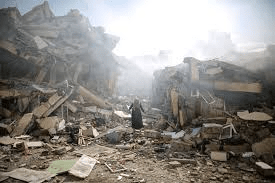
Unfortunately, the same reductionism passed down from one father to one son keeps being passed down in many places, as painful and complex matters of war, belief, national borders and international law are classified into a binary anti-Semitism/not anti-Semitism divide. That’s too simple, too easy, and – for a variety of reasons, some of which make daily headlines – too dated. Today’s outcries around Israel and Gaza might be inflammatory, they might be emotional, they might even be incorrect; that doesn’t mean they’re anti-Semitism. Here and there, authentic traces of the world’s oldest hatred may still be detected. But it’s not a hatred that’s kept up with the times, and continuing to misapprehend it in the third decade of the Twenty-First Century is to blame new realities on its original lies, to cheapen the guilt of its original perpetrators, and to dishonor the memory of its original victims.
 George Case, Writer