

Here’s a hypothetical that may turn into an actual before too long. In April 2022, the Canadian federal government announced a plan to make illegal the denial or downplaying of the Holocaust, the Nazis’ murder of six million Jews and others in Europe between 1933 and 1945. Irwin Cotler, the Prime Minister’s Special Envoy on preserving Holocaust Remembrance and Combating Antisemitism, applauded the proposed law, saying that “Holocaust denial and distortion constitute a cruel assault on memory, truth, and justice – an antisemitic libel to cover up the worst crime in history.” Later that year, members of the House of Commons unanimously passed a motion recognizing Canada’s Residential School System as an act of genocide. “Today I lift up survivors, families, and communities who have sacrificed so much in order for people across Canada to know the truth: that what happened in residential schools was a genocide,” the motion’s sponsor, New Democratic Party MP Leah Gazan, was quoted.
Now, the United Nations’ definition of genocide was codified in 1948, as the enormity of Nazi Holocaust became known to the world. The UN Office on Genocide Prevention explains that the word signifies “any of the following acts committed with intent to destroy, in whole or in part, a national, ethnical, racial or religious group, as such: Killing members of the group; Causing serious bodily or mental harm to members of the group; Deliberately inflicting on the group conditions of life calculated to bring about its physical destruction in whole or in part; Imposing measures intended to prevent births within the group; [or] Forcibly transferring children of the group to another group.” According to these parameters, it’s indeed possible – a stretch, but possible – to include the Residential School System in the genocide category.
Yet consider this. Under Adolf Hitler, the German state used the machinery of its government, including its civil service, its military, and its transport and public works infrastructure, to administer the physical extermination of a select population. Germany was an advanced industrial nation that, over just a few years, organized the project and clearly documented it in many records, notoriously in the minutes of the Wannsee Conference of January 1942. In Canada, meanwhile, under a succession of colonial and national offices dating from at least two centuries ago, policies towards Native peoples have varied widely – ranging from sanctioned neglect, to assimilation, and to nation-to-nation treaties, official apologies, and an elaborate complex of political and legal regulation. It’s not a pretty history, but there’s a lot of it, extended over a long time.
So, if what Canada did to Aboriginal people in Residential Schools is said to be as much a genocide as what Nazi Germany did to Jewish people – even though the duration, implementation, and stated purpose of each were demonstrably very different – doesn’t that amount to downplaying the Holocaust? How exactly do Native Residential Schools, along with Native reserves and gradual settlement by non-Natives of Native territory, compare to concentration camps, mass shootings, and gas chambers? Is there a case to be made, hypothetically, that characterizing anything less than Hitler’s Final Solution as a genocide might itself be a criminal act, and is every Member of Parliament now liable to be charged with a hate crime?
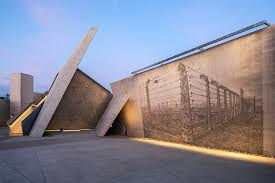
It hasn’t yet come to that, of course. But that’s the logical terminus of what some have called the “Victim Olympics,” whereby Leah Gazan’s “survivors, families, and communities who have sacrificed so much” go up against Irwin Cotler’s “worst crime in history.” On one hand, a law against “downplaying” the Holocaust relies on an open-ended notion of what constitutes an insufficient description of even an acknowledged fact, but on the other, using “genocide” as merely a jargonized descriptor of any historic tragedy dilutes the significance of real attempts to literally kill off whole classes of people. For either event to merit special attention, the other must merit a little less. Combine these two contradictory, mutually exclusive fallacies – that there must only be one approved way to think about the Holocaust, but that there can only be one approved word used to convey the Native Residential School experience – and the result is an Olympics where nobody wins, least of all the Canadian public.
This issue has been complicated by MP Gazan’s September 2024 introduction of a private member’s bill that would, like Cotler’s 2022 initiative, criminalize Residential School “denialism” – defined as any public attempt at “condoning, denying, justifying, or minimizing the facts about residential schools.” (For what it’s worth, private member’s bills are rarely enacted into law without backing by the government of the day.) Here again, two separate histories have been unintentionally thrown into competition, insofar as emphasizing the import of one people’s suffering could be construed as neglecting the import of the other’s. Statistically, there were far more victims of the Nazi genocide than there were Native children enrolled at residential schools, although there may have been far more Indigenous North and South Americans who died from European diseases and displacements than Jewish Europeans who perished in the Holocaust. So whose suffering outweighs whose? Which history is it okay to minimize by comparison?
In his 1999 book Images of the Holocaust, British academic Tim Cole cautioned that “[i]t was not until the ‘Holocaust’ became an iconic event that was perceived to be an event worth denying.” The point is not that it didn’t happen – the point is that there are unintended consequences when we enforce the recognition that it did. Thus the proposed enlistment of the Canadian justice system against anyone who “denies” something raises obvious objections around the rights to free speech and free thought. When acceptance or agreement is mandated by the state, subversive resistance and skepticism will naturally arise, as it did among citizens of Communist regimes constantly browbeaten into endorsing whatever propaganda the Party threw at them. If it’s real, who cares if it’s denied? I deny that blue and yellow mix to make green; I deny that the earth is round; prove me wrong. As it is, there are already any number of Canadians – including Native persons – who’ve asserted that residential schools indeed delivered some benefits to their pupils and that their mission was in no way genocidal. If Leah Gazan has her way, though, they’d all be in jail. Unless Irwin Cotler gets there first.
 George Case, Writer
Why does any difference in circumstances of the Holocaust vs Indigenous children in residential schools diminish the horror of either as genocide? To me it’s like the word “cancer”. The fact that lung cancer is the most aggressive kind of cancer doesn’t diminish the deadliness of pancreatic cancer. Genocide can destroy quickly or slowly but if unchecked it will, like cancer, still end up with destruction.
Lif, you make a fair point, and one that Canadian Members of Parliament would agree with. My point here is that the earlier rule against “downplaying” the Holocaust could, in theory, come up against anything that makes an arguably strained comparison to it. An interesting take on this issue can be read here: https://quillette.com/blog/2022/10/31/welcome-to-canada-nation-of-genocidaires/
As always, thanks for reading – g
The Canadian government of the time was just doing what it saw as the right thing — civilizing savages and bringing the light of knowledge to them. If they want to dwell in their “traditional knowledge” forever, though, let them. Time and technology will take their revenge.
Come visit my blog and leave some comments, if you like
http://www.dark.sport.blog
Thanks for reading and commenting. Yeah, the “genocide” label seems to be an instance of “presentism” – judging actions of the past that seemed reasonable then by the purist political standards of our time. And I agree that the MP’s proposed bill won’t help actual Native communities. I’ll check out your own work soon. Best, gc