
There’s an apocryphal 2016 quote from US television executive Leslie Moonves, who supposedly said that Donald Trump’s surprising visibility as a presidential candidate “may not be good for America, but it’s damn good for CBS.” Whether he was being cynical or just shortsighted, Moonves might have added that Trump’s rise and the polarization it engendered has also been damn good for the publishing industry. A veritable library of titles on Trump, his supporters, and his opponents has appeared in the eight tumultuous years since 2016, in addition to terabytes of online posts and articles reacting and re-reacting to the same subjects. There’s even a book about the books – Carlos Lozada’s What Were We Thinking: A Brief Intellectual History of the Trump Era – and prior to being his running mate, J.D. Vance was himself the memoirist of Hillbilly Elegy, a bestseller said to explain Trump’s support among the white working class. Even my 2021 analysis Takin’ Care of Business: A History of Working People’s Rock ‘n’ Roll got in on the act, arguing that the modern populist wave was anticipated by the classic 1970s music of Lynyrd Skynyrd, AC/DC, and Bruce Springsteen (hey, points for originality, anyway). And new books on Trumpian divides, in all their extremes, are emerging all the time. It may not be good to be a citizen nowadays, but it’s damn good to be a book lover.
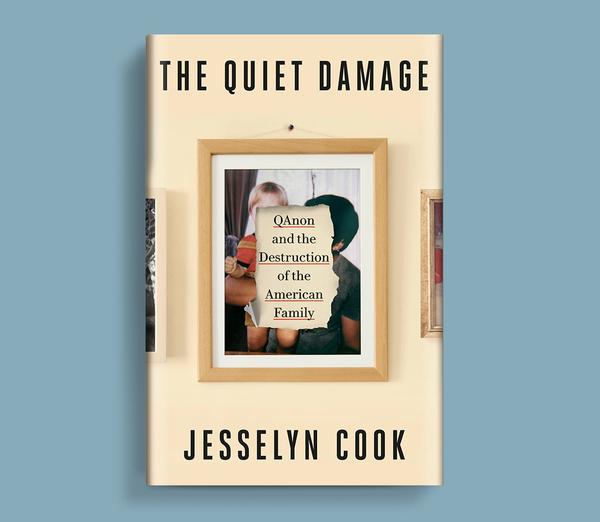
What’s odd with the latest works, though, is that they describe a culture that’s largely moved past their own medium: political literature for a post-literate age. Consider Jeff Sharlet’s The Undertow: Scenes From a Slow Civil War, which goes among the least discerning and least imposing denizens of MAGA country: rural rubes, religious grifters, and even some of the rioters of January 6 2021, most of them driven by a mix of ignorance, isolation, and angertainment, and most of whom seem more pathetic than dangerous. This is not a book of big ideas, but scattered snapshots of cranks from the flyover states, although the incipient civil warriors seem to have been peaceable enough to submit to Sharlet’s anthropology. Likewise, Jesselyn Cook’s The Quiet Damage: QAnon and the Destruction of the American Family, is about people who’ve gone down online rabbit holes into paranoia and conspiracy theories, and the loved ones they leave behind. Cook’s reporting consists almost entirely of tracking her subjects’ emails, social media posts, and preferred websites, buttressing the electronic evidence with almost novelistic (and not entirely convincing) portraits of their offline lives. There’s some poignant moments of couples, siblings, and parents and children growing estranged by what they believe or don’t believe on the internet, but it’s ultimately about sad men and women who spend a lot of time looking at screens.
Even more net-centric is Elle Reeve’s Black Pill: How I Witnessed the Darkest Corners of the Internet Come to Life, Poison Society, and Capture American Politics, which, as per its subtitle, explores the personalities behind the chat rooms, memes, and message boards of the hardcore US alt-right. Reeve saw firsthand the infamous 2017 “Jews will not replace us!” march in Charlottesville Virginia and personally interviewed figures from the various fascist and white supremacist movements of the period, but she also documents their online activities with her generation’s easy immersion in all things digital. Black Pill wants to do for contemporary neo-Nazis what Hell’s Angels did for bikers and The White Album did for Californians, but Reeve is no Hunter S. Thompson or Joan Didion, who at least knew when to step back and put their material, not themselves, front and centre. Similar me-me-me perspectives – but from the other side – are offered in Nellie Bowles’ Morning After the Revolution: Dispatches From the Wrong Side of History, wherein the author charts her encounters with the very woke (super-serious transgender activists, Black Lives Matter leaders, homeless advocates, etc.), with special attention given to her own clever responses.

To mix complementary metaphors, each of these books cherry-picks a lot of low-hanging fruit: they focus on damaged individuals and destructive attitudes most likely to reinforce the contempt their core readerships already hold toward those they disagree with, with little consideration of the complex influences that can steer reasonable people away from an approved consensus on vaccines, immigration, crime, sex, policing, media, education, or other topics. “Extremism” here means anything outside whatever the writers support, with no gray area between the mildest skeptic and the most fanatical hater, and no difference between the thoughtful critic and the mindless partisan. Elle Reeve in Black Pill allows that service companies who withdrew logistical support from racist websites “were capable of distinguishing a guy calling for ethnic cleansing from, say, a guy with a controversial position on tax rates,” yet she herself isn’t interested in just where such distinctions might lie.
The obliviousness to nuance that mark The Quiet Damage, The Undertow, Black Pill and Morning After the Revolution is due less to their particular politics than to the way political ideas are now conveyed. Years ago, you might have come across a provocative point in a book or a magazine, then picked up the same unconventional notion from a TV program a few weeks later, and then checked out the pamphlet of a fringe party a year after that, with plenty of time in between to muse over alternative takes on the same issues. No one else needed to know how you thought. Under today’s regime of the algorithm, however, you are every moment only a few curious clicks away from getting deeply into – and then being publicly identified with – the most radical, inflammatory, or dishonest expression of any current ideology right or left. After that, the course of your intellectual evolution (or decay) is there for anyone to see, if they’re willing to put in hours at a keyboard following your electronic trail and cataloguing its weirdest turns. Everything you stand for, and everything you denounce, can be summed up in search histories, likes, shares, text messages, and podcast episodes. It’s ironic that the journalists investigating the symptoms of this condition aren’t able to diagnose when they succumb to the disease themselves.
For a worthwhile alternative to these, Arlie Russell Hochschild’s Stolen Pride: Loss, Shame, and the Rise of the Right goes as deeply into the lives of politically marginalized Americans as The Undertow, The Quiet Damage, Black Pill, and Morning After the Revolution, but without the predetermined judgements. Listening to a racially, economically, and ideologically diverse cross-section of rural Kentuckians in the Trump era, Hochschild gives a fuller account of the forces compelling polarization in the US today through a collection of sensitive mini-biographies, which together suggest that the problems aren’t just social media but also layoffs, addiction, family breakdown, demographic change, and the decline of personal and regional status relative to other voters and other communities. No one fits neatly into a convenient stereotype; no one is included just to prove a point; the writer herself stays mostly in the background. “Men who had based their identity on skills and lifeways that had since been devalued were men holding back grief and without the means to mourn it,” she characterizes this subculture. “Abandoned as many felt by both political parties, and without a larger narrative speaking to their dignity and invisibility, a narrative of ‘stolen’ rose up.” In a few weeks we’ll see which version of the politics portrayed in these books prevails. It’s an interesting time to be a nonfiction reader, but right now it must be terrifying to be an American.
 George Case, Writer
I enjoyed reading “Black Pill” and “The Quiet Damage” quite a lot and was somehow oblivious to the me-centric criticisms you (validly) point out. Adding “Stolen Pride” to my reading list now for contrast.
Thanks for reading and commenting. Black Pill and The Quiet Damage were readable enough, although I thought BP was a bit self-indulgent and TQD possibly overdramatized. Stolen Pride was quite insightful, and the same author’s “Strangers in Their Own Land” is also pretty pertinent right now. Happy reading, and voting.