
As a middle-aged father of two young adults, I enjoy the perspective of several generations: my elders’, mine, and my kids’. Having seen what was important to more or less mature, informed people in 1975, in 1997, and now in 2026, I can reflect how a few perennials – ideas, occupations, or events that everyone seemed to agree mattered, somehow – are living on past reputations that fewer and fewer of us actually buy into. Consider this list, and ask yourself if you and others you know think the same about them as we did in earlier decades:
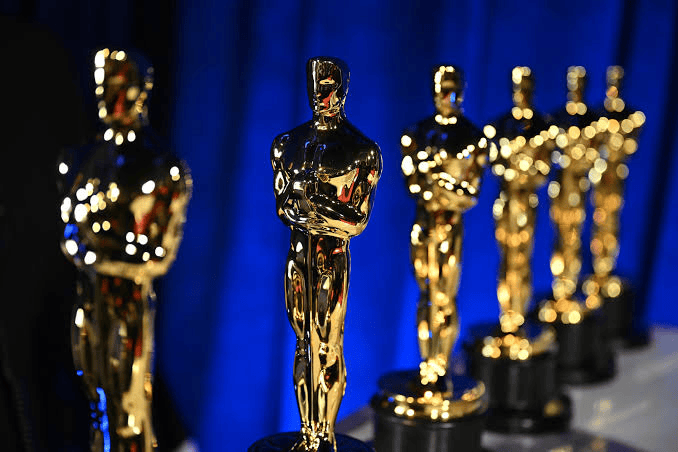
The Academy Awards Not only have television ratings for the annual Oscar ceremonies been in decline for years, but many people are now doubting the very future of the movie industry as we’ve known it. What was once “Hollywood’s Big Night” is now just one among dozens of awards shows which celebrate – or desperately try to celebrate – a range of genres and mediums (the Tonys, the Grammys, the Emmys, the Golden Globes, the BAFTAs, the Video Music Awards, the Country Music Awards, ad infinitum), and the Academy officials’ attempts to liven up the proceedings or make the competition more inclusive have only reminded us of how the cinema of big-screen theaters, genius directors, and larger-than-life superstars has shrunk down to streaming services, CGI-generated visuals and AI-generated screenplays, and social media influencers. After a hundred years, most living things are dead, or nearly so. The first Academy Awards were granted in 1927. Do the math.
The Olympics When every athletic endeavor you know and many you don’t gets a specialized league, playoffs, and championship, what’s so special about the quadrennial spectacles of rowing, freestyle snowboarding, and shot put? At least the World Series, the World Cup, or the Super Bowl are based around single sports which fans might follow through the season, but every four years (why four?), Olympic competitions feature unfamiliar games between largely unfamiliar players, trained and physically enhanced beyond any biological norms most viewers can identify with, all in supposed tribute to national “glories” that may be completely negated by external events like wars or disasters. Host cities have become dystopias where high-tech, high-finance self-promotion barely obscures the local Third World underclass, and there are widespread municipal movements against taking on the gargantuan expense and waste of an Olympic Village in places already teetering on the brink of bankruptcy or revolution. The likelihood of Olympics in 2036 or 2042? Fail to qualify.
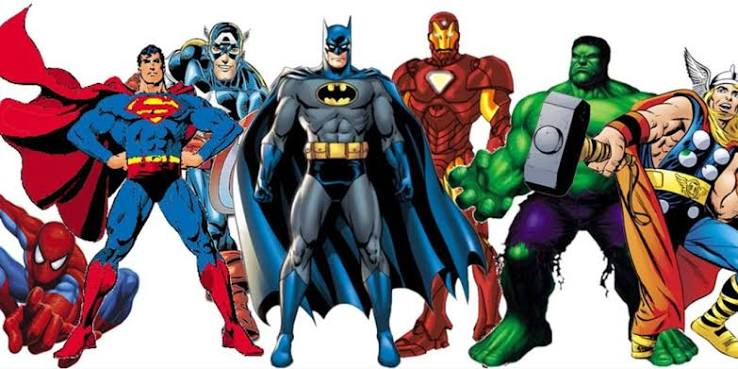
Superheroes Sure, there are still humongous summer blockbusters based around Spiderman, Superman, or the X-Men, but the central premise of the original comic book characters – cleverly disguised or unusually empowered people who fight crime – is all but forgotten today. What made the adventures of caped crusaders entertaining, in 1945 or 1978, was the idea of unique individuals who could rise above the chaotic anonymity of urban life to do spectacular good and battle spectacular evil. They inspired lesser folks (like children) to do the same on more modest scales. Today’s figures, in contrast, are all about the spectacle, with no pretense of representing ordinary values and no qualities of ordinary human-ness to identify with. For all their big-budget visibility, there’s no one left in the audience who wishes, even a little, that superheroes could be real.
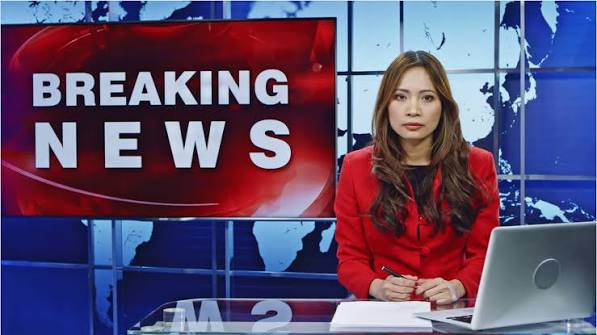
News Anchors As television in all its forms (broadcast, cable, digital) devolves into just another content channel on our phones, the gravitas of besuited people sitting behind desks summarizing current events off teleprompters has all but vanished. TV networks still recruit star personalities, most of them vapidly, interchangeably attractive, to fill the prestigious anchor spots, but the viewership is a fraction of what it was in the 1960s or 1980s; the conceit that such figures remain some sort of national parent or wise man, solemnly imparting the Truth to their attentive, trusting families every 6:00 PM, has terminally deflated under the 500-channel universe, various newsroom scandals, and innumerable parodies on Saturday Night Live and elsewhere. “If I’ve lost Cronkite, I’ve lost Middle America,” Lyndon Johnson supposedly lamented when the venerable CBS newsman aired doubts over the US war in Vietnam. In 2026, Middle America has no Cronkite, and there are no more Cronkites left to lose.
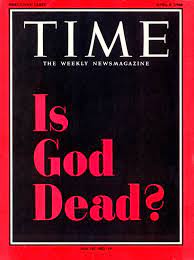
Time magazine A print equivalent of the above, the once-indispensable weekly used to serve as millions of middlebrow readers’ guide to news, culture, and ideas. Now, like other glossy publications crushed under the electronic information avalanche, it’s reduced to running Special Editions on autism, the world’s greatest places, Pokemon, and Harry Styles. The Time brand – and certainly making the Time cover or being designated its Person of the Year – used to be practically a news story in itself, steering the public conversation and defining what was Important every seven days. Today, with the ideal of impartial journalism increasingly disdained, and the craft of human-authored reporting increasingly obsolete, Time is a paper-and-ink version of the crusty old codger trying to get anyone to listen to his take on the world. Nobody hears you, gramps.
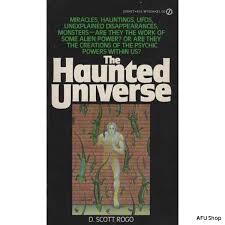
Urban legends & The Unexplained You know: aliens, vanishing hitchhikers, mysterious monsters, and Paul McCartney is dead. For a long time, there was always a social undercurrent of baseless or speculative discourse around fringe beliefs. Often it was confined to the tabloid press, or pulp paperbacks, or cheesy documentaries, or just unverified whispers circulating through the school playground or the cocktail party. Such subjects haven’t gone away, exactly, but they are now permanently floated on social media and other online outlets, to be constantly shot down and then resurface somewhere else. What made the premises intriguing is that they could never be conclusively disproved (or no one took the trouble to) and so the possibilities of Bigfoot, the Bermuda Triangle, and sewer alligators lingered on in mass semi-consciousness for many years – whereas now, their validity or lack thereof gets Googled, YouTubed, and Instagrammed twenty-four hours a day. That’s how legends die.

Obscenity While free speech is a hot-button issue in the present, its controversies derive mostly from political expressions said to be offensive to one or another partisan group – the woke left versus the MAGA right, drag queens versus religious traditionalists, pro-Israel advocates versus pro-Palestine activists, and so on. Other than those, you can pretty much get away with saying and showing anything to audiences who’ll countenance them, including torrents of profanity, stomach-churning violence, and every conceivable taste of explicit pornography. Yet we forget the extent to which foul language, and depictions of sex and nudity, were once central to legal debates over “community standards.” In the 1960s and 70s, comedians like Lenny Bruce were arrested for voicing “shit” or “fuck” in their routines, while George Carlin’s “seven dirty words” bit was a semi-official guide to what couldn’t be heard on television. Movies from the same era, like I Am Curious (Yellow), Deep Throat, and A Clockwork Orange, pushed up against cinematic censor boards in many regions. Over the last sixty years, we’ve pretty much given up invoking “filth,” “smut,” and “obscenity” to clamp down on these kinds of talk and pictures. Probably a good thing; isn’t our society happier and healthier for it?
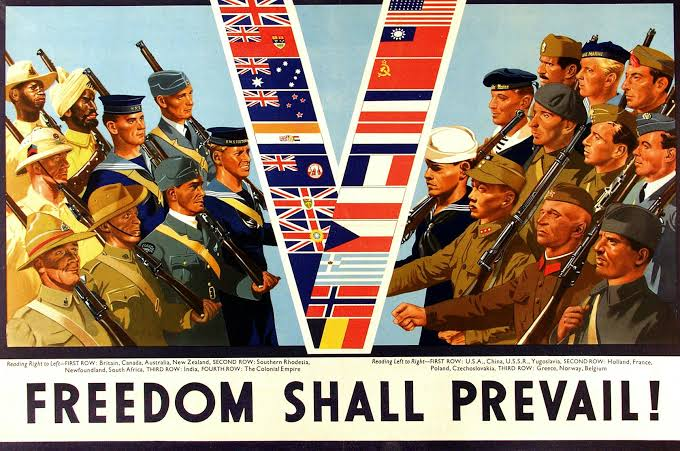
The “Free World” A relic of the Cold War standoff between the NATO alliance and other nominal democracies against the nations of the Soviet-led Warsaw Pact, the notion that one side is defined by liberal standards of law and governance just doesn’t obtain in the post-2000 era. It’s not because some countries aren’t genuinely more free than others, measured by fair elections, and political and religious tolerance – it’s because the free ones aren’t coordinating their policies the way they once did. At the same time, globalization means that democratic societies and non- or at best semi-democratic nations are obliged to make economic and other deals with each other; we no longer have the self-contained spheres of North America, Japan, and western Europe, or the USSR and eastern Europe, exclusively trading within their own territories. And as much as anything, even supposed pinnacles of freedom (pick your own) have been internally compromised by creeping authoritarianism, corruption, and demagoguery. Claim anything on behalf of the Free World today and you’ll get a blank stare, or a cold chuckle.

The Holocaust Though no one should doubt the reality of the Nazis’ Final Solution aimed at the Jews of Europe between 1941 and 1945, it’s important to note that popular understanding of its place in history has changed since the end of World War II, and continues to change now. Peter Novick’s 1999 book The Holocaust in American Life observed that it was not until the 1960s that Hitler’s attempted genocide began to be perceived as a stand-alone event, and grew in subsequent decades to become exclusively memorialized in popular culture, education, and politics. Yet as nearly all the Holocaust’s perpetrators and victims have died off, as the Jewish state of Israel looms as the dominant power of the Middle East, and as members of the Jewish diaspora continue to enjoy security and prosperity in countries around the world, citing the Holocaust and “Never again” in contemporary conversations feels more and more incongruous, or irrelevant. Long (and glibly) held as the be-all and end-all of historical oppression, it’s outstayed its welcome in our imaginations. Although we shouldn’t forget the Holocaust, we should find better ways to remember it.
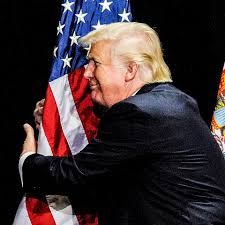
The American Presidency As far back as the Bill Clinton administration in the 1990s, the occupant of the White House was being written off as “Entertainer-in-Chief,” an almost ceremonial office measured as much by scandals, gaffes, and media attention as by any concrete policies he or she might implement. With no world wars or economic depressions to manage, the run of presidents from Dwight Eisenhower to Barack Obama became primarily known as newsmakers, people who’d gained the title out of ambition and careerism more than any particular abilities or national visions. Many, of course, were consequential figures who made big decisions (right or wrong) and set conspicuous examples (good or bad), but waves of social and technological change across the globe gradually reduced them to players in bigger dramas; for all their authority, individual US chief executives might be overshadowed during their terms by evolving conditions over which they had no control. The only things maintaining the stature of the presidency, then, were the personal qualities of the presidents themselves – the deep intellect, tempering experience, calm dignity or moral character required for the job, dutifully represented by those to whom the American voters awarded it. Need I say more?
None of this is to argue that these things are objectively insignificant, or that they shouldn’t be recalled for their lasting legacy. “Classic” novels or art, of course, go in and out of fashion all the time. If you’ve participated on a national gymnastics team, or if you had family murdered at Auschwitz, no doubt you’ll still care about the Olympics or the Holocaust. But there’s a tendency to bring up what’s listed here as if the entries still carry as much cultural import or emotional weight as they did thirty or fifty years ago – as if they’re still universally recognized as standards of success or seriousness that impress every audience, cap every claim, and settle every debate. They don’t, and our civilization ought to admit this to itself and move on.

