
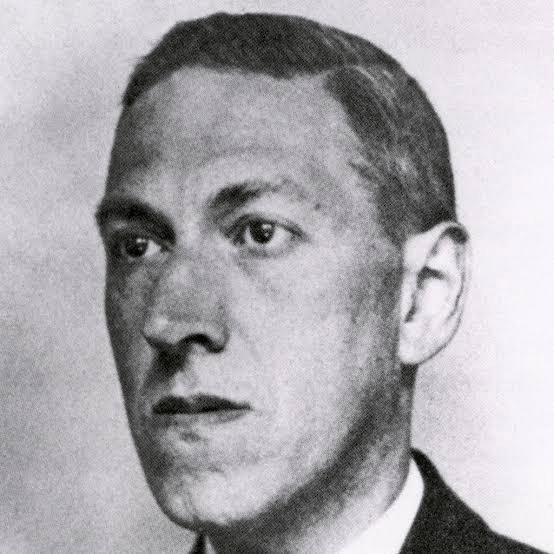
H.P. Lovecraft must surely be one of the most posthumously successful writers ever. Upon his death in 1937 he was known mostly to readers of specialty American pulp magazines like Weird Tales, but in the subsequent years, and especially since the 1960s, his stories gained a wider and more appreciative global audience; he has eventually grown to be regarded as the heir to Edgar Allan Poe and a forefather of Stephen King in the pantheon of horror literature. An industry of books, movies, graphic novels, video games and television has built on his themes, and his uniquely archaic prose style (“…a frightful messenger from unformed realms of infinity beyond all Nature as we know it; from realms whose mere existence stuns the brain and numbs us with the black extra-cosmic gulfs it throws open before our frenzied eyes…“) has established a virtual genre unto itself. Lovecraftian today signifies any narrative about existential terrors revealed to vulnerable mortals discovering themselves adrift in a vast and indifferent universe.
What also emerged from this afterlife, though, was that Lovecraft was an unapologetic racist. “Never ask a woman her age, a man his income, or H.P Lovecraft the name of his cat,” goes the quip passed among aficionados (the cat was black, and let’s leave it there). While some of his published pieces hinted at this outlook (e.g. “The Horror at Red Hook” and “The Call of Cthulhu”), it was in the voluminous private correspondence unearthed by fans and scholars that his own bigotry was made explicit. As early as a 1975 biography by L. Sprague de Camp, Lovecraft’s most inflammatory opinions, voiced in letters to family members, acquaintances, and fellow writers, were quoted extensively. A sampling:
I certainly hope to see promiscuous immigration permanently curtailed soon – Heaven knows enough harm has already been done by the admission of limitless hordes of the ignorant, superstitious, & biologically inferior scum of Southern Europe & Western Asia.
The only thing that makes life endurable where blacks abound is the Jim Crow principle, & I wish they’d apply it in NY…Either stow ’em out of sight or kill ’em all off – anything so that a white man may walk along the streets without shuddering & nausea!
The mass of contemporary Jews are hopeless as far as America is concerned…The fact is, that an Asiatic stock broken & dragged through the dirt for untold centuries cannot possibly meet a proud, play-loving warlike Nordic race on emotional parity…I’ve easily felt able to slaughter a score or two when jammed in a NY subway train.
I know [Adolf Hitler]’s a clown, but by God I like the boy!…Hitler is ill-informed, badly balanced, & neurotic – but he is one of those crude forces which sometimes make history…
There’s little debate now that Lovecraft really held such views (a good recent study of his career and beliefs is W. Scott Poole’s In the Mountains of Madness: The Life and Extraordinary Afterlife of H.P. Lovecraft, from 2016), but what are we to make of them almost a hundred years on? The issue here isn’t about separating the art from the artist – as with, say, Roald Dahl, who authored charmingly quirky children’s books like Charlie and the Chocolate Factory and also, in interviews, made scathing comments about Jews. Nor is it simply a matter of “Everyone thought like that back then” – consider Lovecraft’s contemporary, essayist H.L. Mencken, whose diaries have been revealed to contain disparaging remarks about Black people and Jews despite his own relatively progressive advocacy. Instead a more troubling question is: how might Lovecraft’s attitudes seem to actually be reasonable?
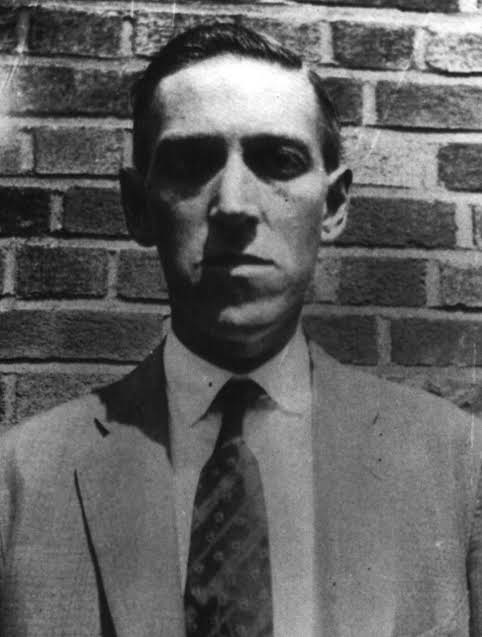
Apologists have noted that Lovecraft was never known to be openly abusive to non-WASPs – indeed, he was a reclusive personality who appeared to prefer epistolary connections to socializing with anyone in person, and the vitriol of his letters was seldom heard to come out in ordinary conversation. “Emotionally he was kindness personified,” de Camp quoted one of his friends. “[The racism] was all rhetorical.” He also had a brief (and apparently near-sexless) marriage to a Jewish woman, Sonia Greene. Perhaps hostility to outsider groups was, to Lovecraft, only an aspect of the cold rationalism that was so central to his horror stories. Perhaps.
On the other hand, like other instances of “reckoning” with the racism of historical figures or institutions, the reevaluation of H.P. Lovecraft can unintentionally expose the original logic behind whatever now-unacceptable positions are exposed. In his life, Lovecraft’s sensibilities occupied a gray area between snobbery and social Darwinism: raised in the sleepy former colony of Rhode Island, he took inordinate pride in his pre-1776 heritage, and was both fascinated by contemporary advances in astronomy and physics, and appalled by the rapid urbanization and demographic shifts in the United States of the 1920s. Lovecraft’s xenophobic diatribes are unpleasant to read, but many fourth- or fifth-generation white Americans (including Lovecraft’s occasional correspondent, Conan creator Robert E. Howard) had similar reactions to the influx of newcomers in the early Twentieth Century. Faced with a surge of arrivals who look, speak, and worship differently, you’d have to be unusally tolerant to welcome the prospect of being suddenly outnumbered; few of Lovecraft’s peers might have reflected, “This place is getting pretty boring – we need to bring in a lot more people who don’t much resemble the ones who are already here. Oh, and most of them should be poor and uneducated, too.”
Today, the notion that “diversity” is a self-evident good to which only haters object is increasingly disputed, in Europe, Canada, and the US. Even moderate voices in many countries acknowledge that unfettered immigration strains labor markets and public services, and that governments should strive to instil some unifying sense of civic cohesion in new and settled citizens alike, whatever their backgrounds. And the alienating crowds of big cities are hardly something no one but racists dislike – see the closing passages of H.G. Wells’s The Island of Dr. Moreau, from 1896: “I would go out into the streets…and prowling women would mew after me, furtive craving men glance jealously at me, weary pale workers go coughing by me, with tired eyes and eager paces like wounded deer dripping blood…Particularly nauseous were the blank expressionless faces of people in trains and omnibuses; they seemed no more my fellow-creatures than dead bodies would be…”
In 2026 we may read H.P. Lovecraft’s politics as an embarrassing reflex that lessens the appeal of his imaginary monsters, cults, and forbidden books. However ornately wrought the scares of “The Haunter of the Dark” or “The Colour Out of Space” might be, they’re tarnished by knowing the ugliest sentiments of the man who composed them. Or, we could also see in the writer’s nativism an understandable response that he managed to channel into his best work, while saving its most unfiltered language for only trusted associates. A century after expressing murderous antipathy towards the “non-Aryan” immigrants and descendants of African slaves in his midst, Lovecraft probably wouldn’t much moderate his convictions now. And he’d probably find plenty of folks – not just horror buffs and New England antiquarians – who, secretly and not so secretly, feel at least a little bit the same as he did.

